We shed cells. Billions of them. Every day it happens inside the dark quiet of your body, a constant churn where the old die to make room for the new.
We used to think that when a cell decided to kill itself, the breakup was messy. Random. Just debris waiting for a mop.
Wrong.
It turns out there’s structure to the suicide.
A team from La Trobe University found what they call the “footprint of death.” It’s a specific signal left behind when a cell dies, guiding the immune system to do its job—pick up the trash, clear the site, keep inflammation from starting a war with our own tissues.
Sounds helpful, right?
Well, yes. But here is the glitch in the system.
Viruses caught wind of it. Or at least, they evolved to use it.
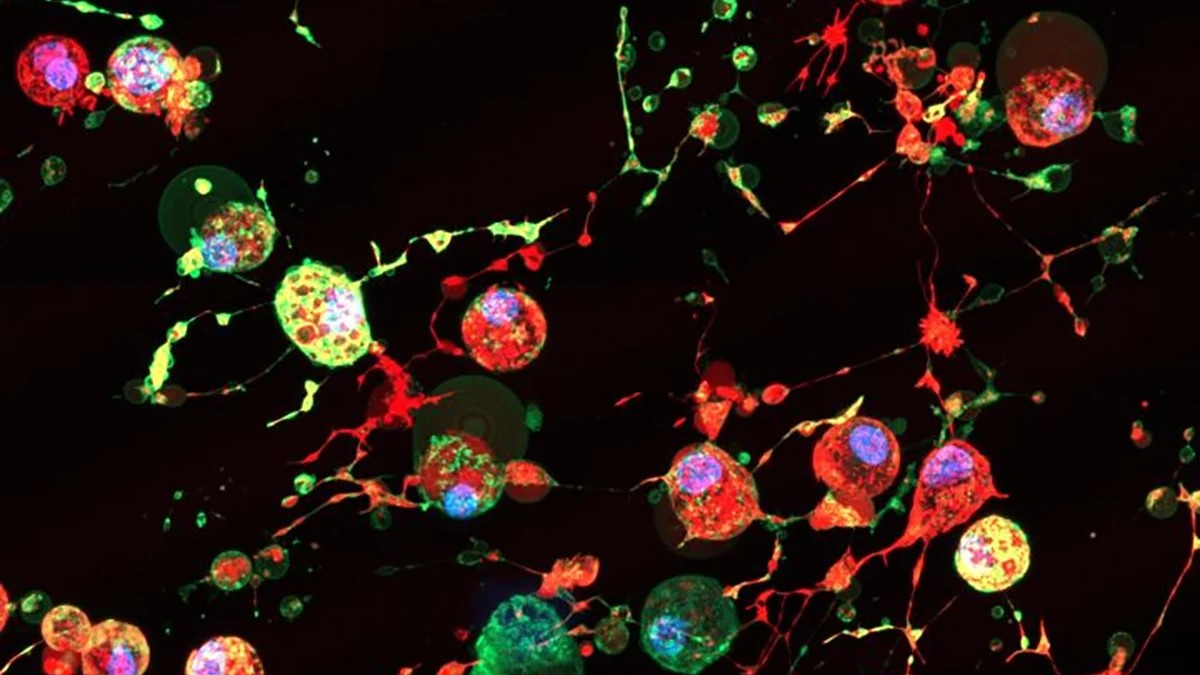
The researchers published this in Nature Communications. They looked at apoptosis—the programmed way cells commit suicide when they are damaged or obsolete. They didn’t just watch them die; they mapped the aftermath using 3D time-lapse imaging.
They expected to see generic debris. They expected the usual extracellular vesicles. Little pockets of protein and DNA that cells toss out to chat.
What they found was new. A specific type of vesicle.
They named them F-ApoEVs.
Footprint of apoptosis EVs. A bit of a mouthful. Think of them as breadcrumbs.
The dying cell leaves these crumbs down the trail. The immune system follows the scent to the body. It eats the debris. Simple cleanup. Efficient.
Stephanie Rutter, a biochemist who led the dig, put it this way:
“We knew the body had to clear these fragments or they would linger. Lying there causes autoimmunity. But we didn’t expect viruses to hide in these packets.”
Influenza, specifically, learned to stow away.
Here’s the move. A cell gets infected. It starts dying. The virus packs itself into an F-ApoEV. The immune system rolls up. It sees the “footprint.” It grabs the vesicle. It carries the dead cell’s remains away to process them.
Except the cargo isn’t just dead cell matter. It’s a virus.
And the immune system drops it off nearby. In healthy tissue. In fresh cells waiting to be eaten.
So the very thing meant to stop the spread becomes the vehicle for it. The cleanup crew distributes the infection.
Is it the end of the world?
No. It’s just biology. Complex and brutal.
We can probably fix this. Or try to.
If we understand the footprints, maybe we can jam the signal. Or make the vesicles easier for the body to burn safely without releasing their cargo. Drugs could potentially tweak how F-ApoEVs form, stopping the virus from hitching a ride while still letting the immune system clear the dead cells.
Georgia Atkin-Smith from the Walter and Eliza Hall Institution put it nicely:
“Dying cells can communicate from the grave.”
It changes the map.
We thought we knew how cell death worked. We thought it was just a shutdown. Now we know it’s a broadcast. And the virus is listening.
The lab results are clear. The real world? We don’t know yet. We need more tests. We need to see if this holds up outside the petri dish.
For now, just know this: when you die, your cells keep talking. And something is listening.
Related: We Thought This Cell Death Phenomenomenon Was Irreversble, But We Were Wrong