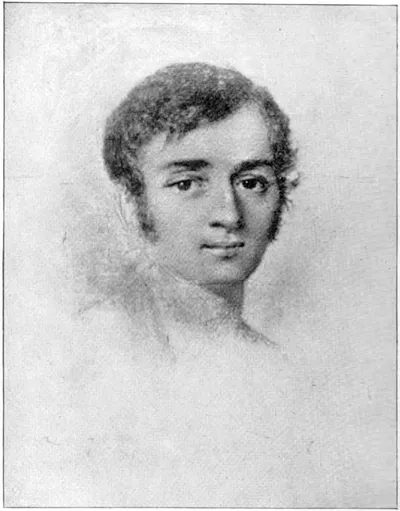
Joseph Nicolas Nicollet did not start out as an explorer. He was a mathematician. A brilliant one. Born in Cluses, Savoy, in 1786, he showed early promise in astronomy and math. By 19, he was already teaching. By his twenties, he was working with Pierre-Simon Laplace at the Paris Observatory. He became a professor at the Collège Louis-le-Grand. It was a prestigious life in France.
Then money ran out.
In 1832, financial reverses forced Nicollet to leave Europe. He immigrated to the United States. He started in New Orleans. Then he moved to St. Louis, Missouri. It was there that his career took a sharp left turn.
The wealthy Chouteau family backed him. With their support, Nicollet led an expedition in 1836–37. He surveyed the sources of the Mississippi River. This was not just a walk in the woods. It was precise surveying. He applied rigorous mathematical methods to rugged terrain.
In 1838, the U.S. Army Corps of Topographical Engineers hired him. He took a government role. He led another expedition from 1838 to 1839. His goal was to map the region between the upper Mississippi and Missouri rivers. John C. Frémont assisted him. They worked together to chart unknown lands.
Nicollet prepared a detailed map of the region. He also wrote a report on the expedition. These works were published in 1843. Nicollet did not live to see them. He died in Washington, D.C., on September 11, 1843.
“Nicollet applied rigorous mathematical methods to rugged terrain.”
His map remains a key historical record. It shows how European scientific training met American wilderness. It answers how we first understood the upper Mississippi basin. The data is still there. The map is still used. Nicollet’s work bridges two worlds. He left France for money. He stayed for discovery.