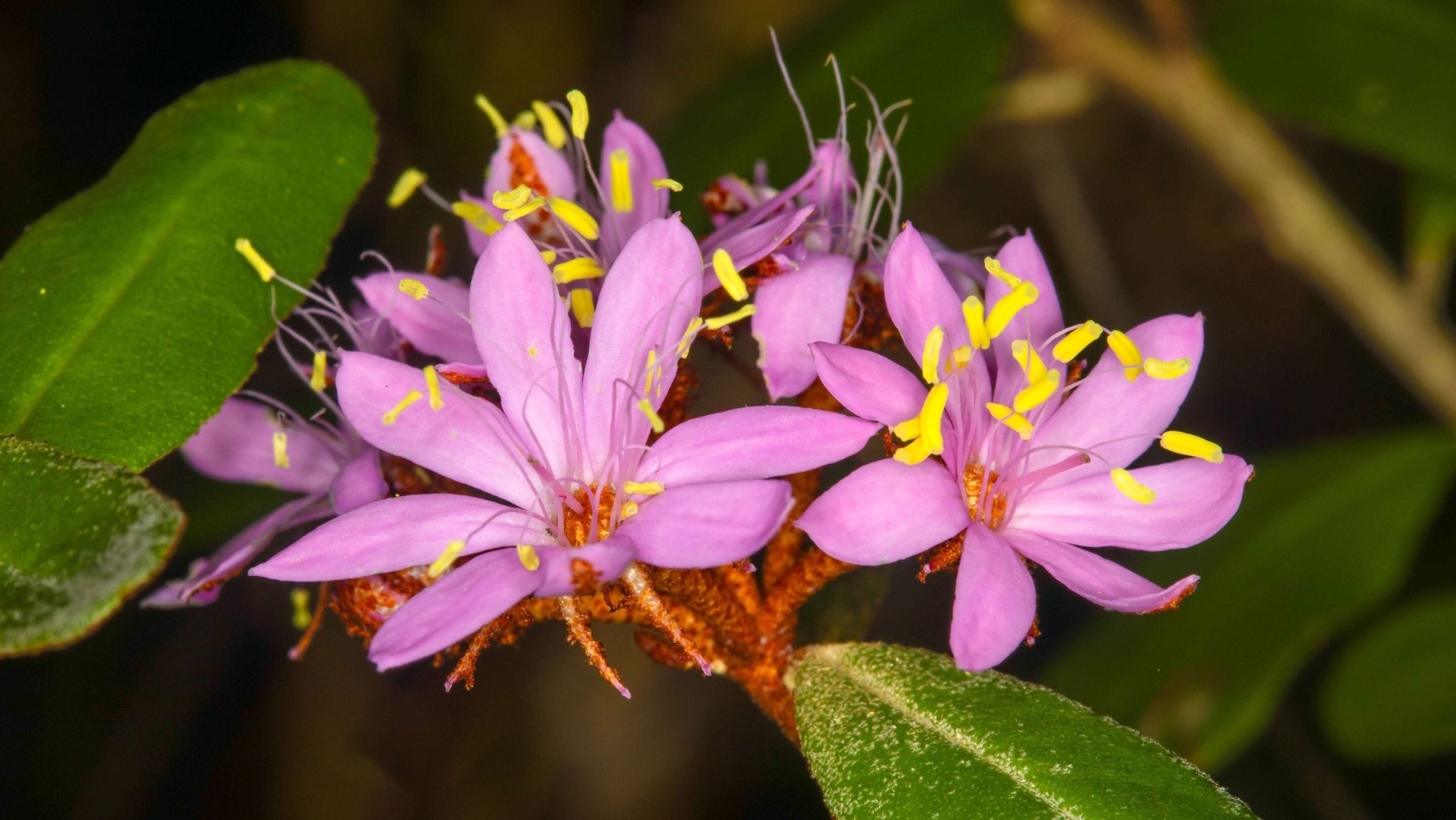
It wasn’t Phebalium nottii. It was hiding right there. For over 100 years, botanists looked at this bright pink shrub in northeastern New South Wales and saw the familiar species they already knew.
They were wrong.
University of New England researchers finally sorted it out. They named it Phebalium banyabza. A distinct species. Endangered. Confined to a tiny slice of the northeast coast. The error isn’t just academic; it messed with conservation data for a century.
How the mistake started
Paul Sheringham works with the Department of Climate Change. He collected a sample north of Grafton. Thought it was routine. Another nottii sighting.
Then the sample went to the UNE herbarium.
Something felt off. The morphology didn’t match the label. Plant ID is the bedrock of saving nature. Mislabel it, and you misjudge the population size. You misjudge the threats. You miss the legal protection entirely.
Physical traits. DNA proof.
Emeritus Professor Jeremy Bruhl and Dr. Ian Telford describe it as lovely. Less than two meters tall. Stunning pink and rusty flowers from late winter to spring. Pretty isn’t enough for a new species, though. You need evidence.
DNA did the heavy lifting. Dr Sangay Dema, then a PhD student, ran the molecular checks. The code said distinct.
The physical details backed it up.
“The specimen featured densely hairy calyces… larger calyx lobes, and bigger seeds.” – Dr. Telford
Hard numbers
So how many are there? Not many.
Two locations. That’s it.
- Site 1: 466 plants
- Site 2: 502 mature plants
Under a thousand total. The threats are stacked against it. Too much fire. Drought. Cattle. And the worst one? It doesn’t resprout from the ground after burning. It relies on seeds. If you burn it every season, the seed bank never refills. The clock stops.
Why the name matters
Banyabba. The name honors the Bandjalag First Nations people. Naming it puts it on the map for the law. It gets listed as Threatened Species under NSW law. Visibility drives policy.
Prof. Bruhl says collaborations like this feed directly into government programs. “Saving our Species” gets real data instead of guesses.
But they didn’t stop at paper.
Horticulturalists at the Australian National Botanic Gardens have propagated the plant. It’s in their living collection now. They might even put it on sale in nurseries. If gardeners can buy it legally, fewer people will poach it from the wild.
The revision continues. The nottii complex is still being sorted out at the herbarium. What else did we miss while looking at the wrong plant?
DOI: 10.751/telopea22637
We found this one. What’s next? 🌿